QuestLog
August 2026 - September 2026
QuestLog is a habit gamified habit forming application that helps users break down their goals into actionable and easily achievable chuncks.
August 2026 - September 2026
QuestLog is a habit gamified habit forming application that helps users break down their goals into actionable and easily achievable chuncks.
Learning a new skill or adopting a new habit can be intimidating. People want to form new, better or healthier habits and skills but oftentimes drop them for a variety of reasons like loss of motivation, lack of time and frustration. There is an opportunity to help people break down their goals into smaller chunks that are easily achievable in smaller amounts of time allowing them to start and giving them the motivational push to continue.
With life busier than ever from work to school to life in general it has become increasingly more difficult to begin a new habit or skill. This has resulted in people not having the time or motivation to even start something they've always wanted to. It isn't uncommon for people to turn to social media and see other people doing things they wish they could do.
There are a flood of other productivity apps to help with this problem. However it is a mixed bag of which features they provide, pricing models and UI that can be confusing to navigate. The demand for an app that helps users break their goals into manageable chunks, aids in focus and provides progress statistics provides a unique opportunity to explore.
The first step after describing the problem was to survey target users to identify their learning habits. This helped me get a better idea on some of the features that should be included in the app.
After conducting user surveys I wanted to get a better idea of apps that were already on the market.This secondary research allowed me to see what features competitors offered to their users as well as how their users reviewed their features and UX/UI design. This helped identify opportunities for improvement where QuestLog stands out.
Habitica, Streak and Finch were three direct competitors that most closely aligned with QuestLog. These apps offered users the inclusion of gamified habit tracking, analytics pages to track how many tasks they have completed, and a varied ease of use with each app's UI. Having both the user interviews previously conducted and an understanding of some direct competitors I had a much clearer vision of what QuestLog should include.
While there are productivity apps like the ones discussed previously many people still opt to use other methods of tracking the habits and tasks they need to complete. Some of which include pen and paper, notes apps, word processing apps, and even writing on their hand. I kept these indirect competitors in mind when designing QuestLog.
Users with ADHD find habit tracking apps very helpful in their life to stay consistent with simple wellness habits (drinking water, brushing teeth, etc.) as well as being able to form new habits and skills like drawing practice and tasks that need to be completed in their professional life. Users also enjoyed being able to see analytic tracking of their habits and keeping a streak going; however users also found a streak system frustrating if there was no way to revive a streak if a task was forgotten to complete once. A very common request was for a calendar to schedule habits. Users generally found having a simple UI very pleasing because they were able to navigate the app quickly and not have anything in their way to interrupt them from completing tasks.
Some notable opportunities to help QuestLog stand out are the inclusion of a gamified pomodoro timer (a dungeon) for focused study sessions and user chosen rewards, a calendar that helps track due dates and goal deadlines, and a simple UI to easily navigate that app and not overwhelm the user.
Due to only having access to a small pool of target users, this project uses personas synthesized from user surveys as well as secondary research, online discussions, and published industry findings.
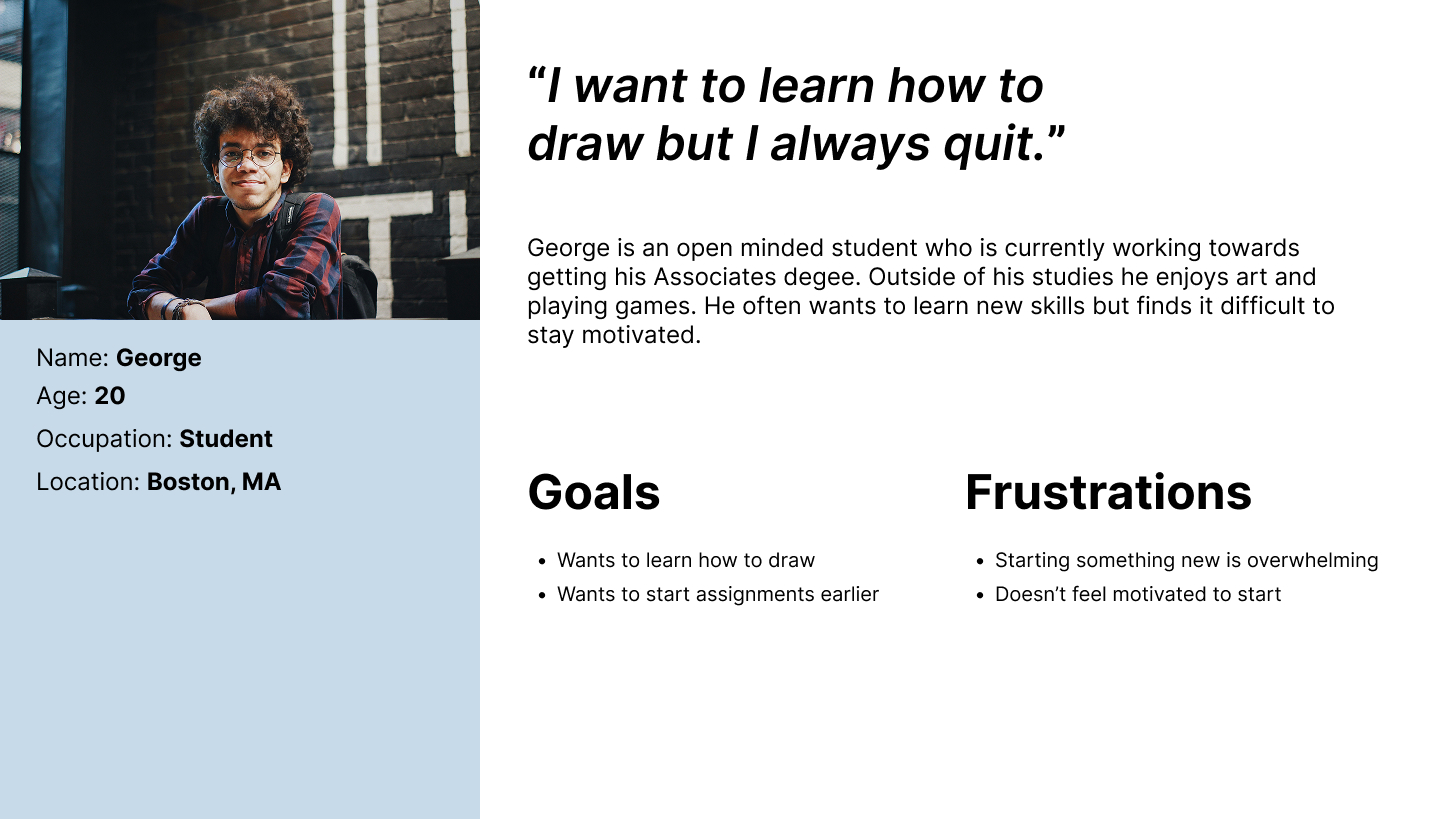
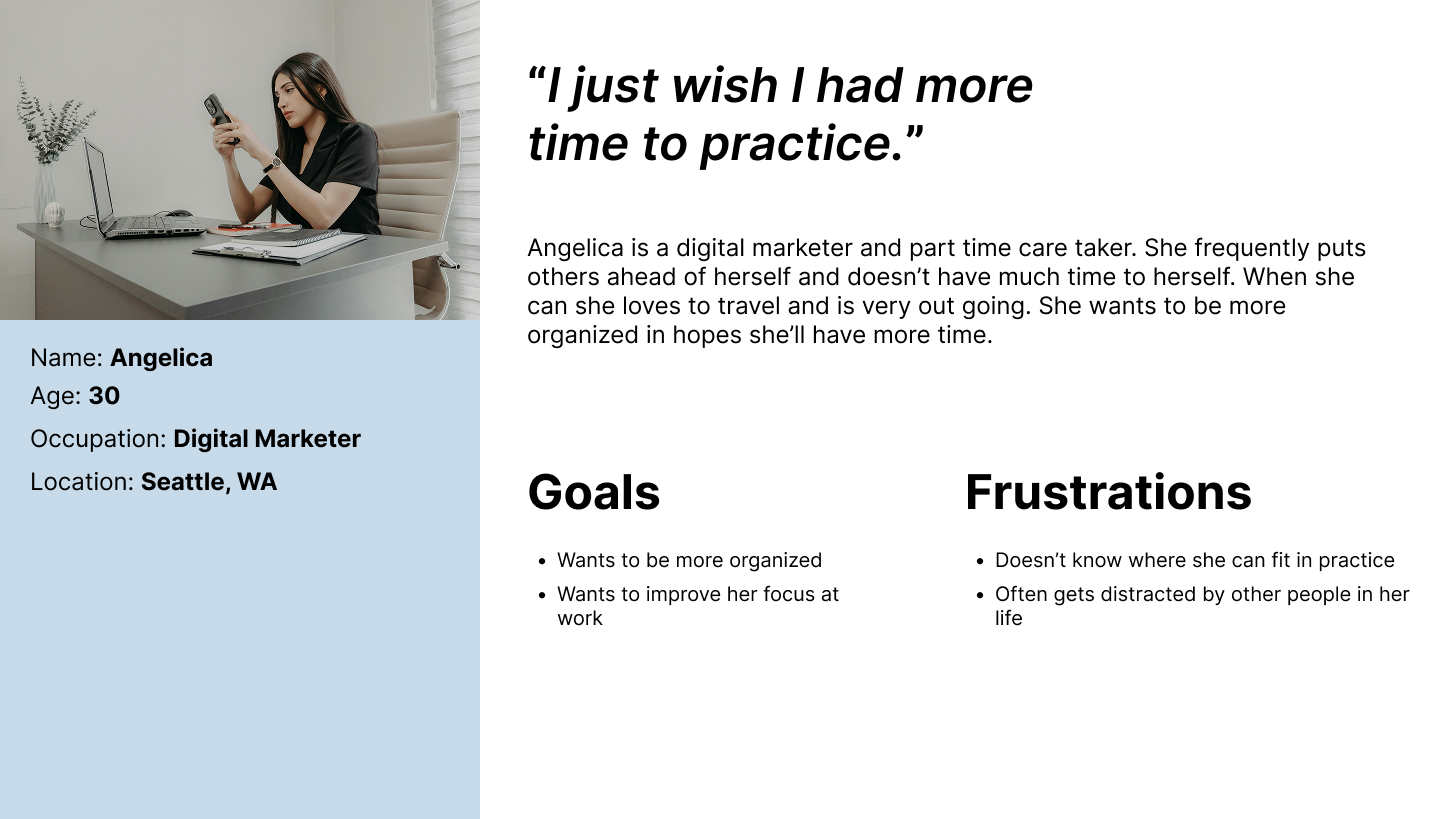
How might we improve motivation for young people so that they can more easily form a new habit, organize their life and continue improving themselves?
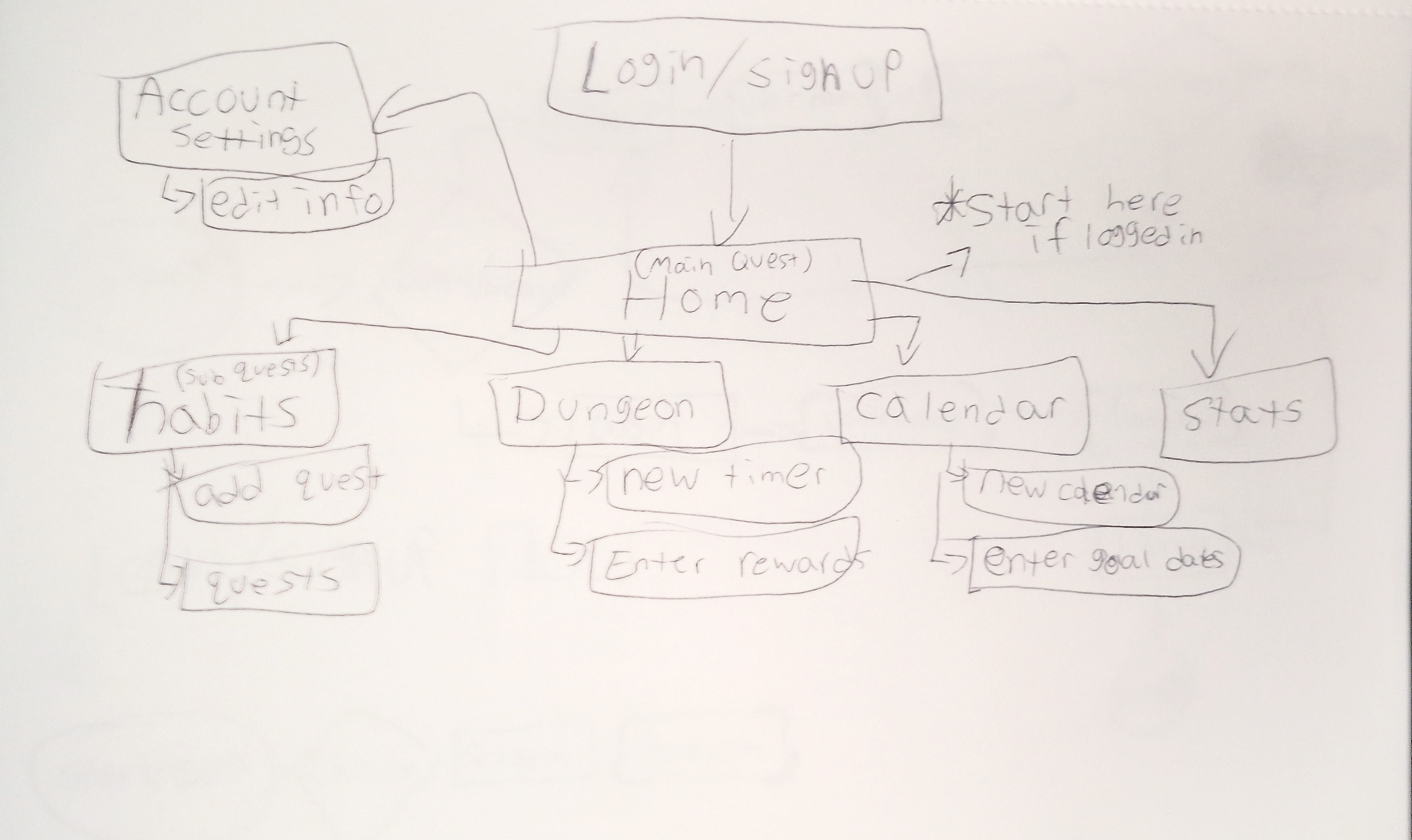
To get a better understanding of how the app would be structured I sketched an initial site map. This helped me identify key pages and features for the app.
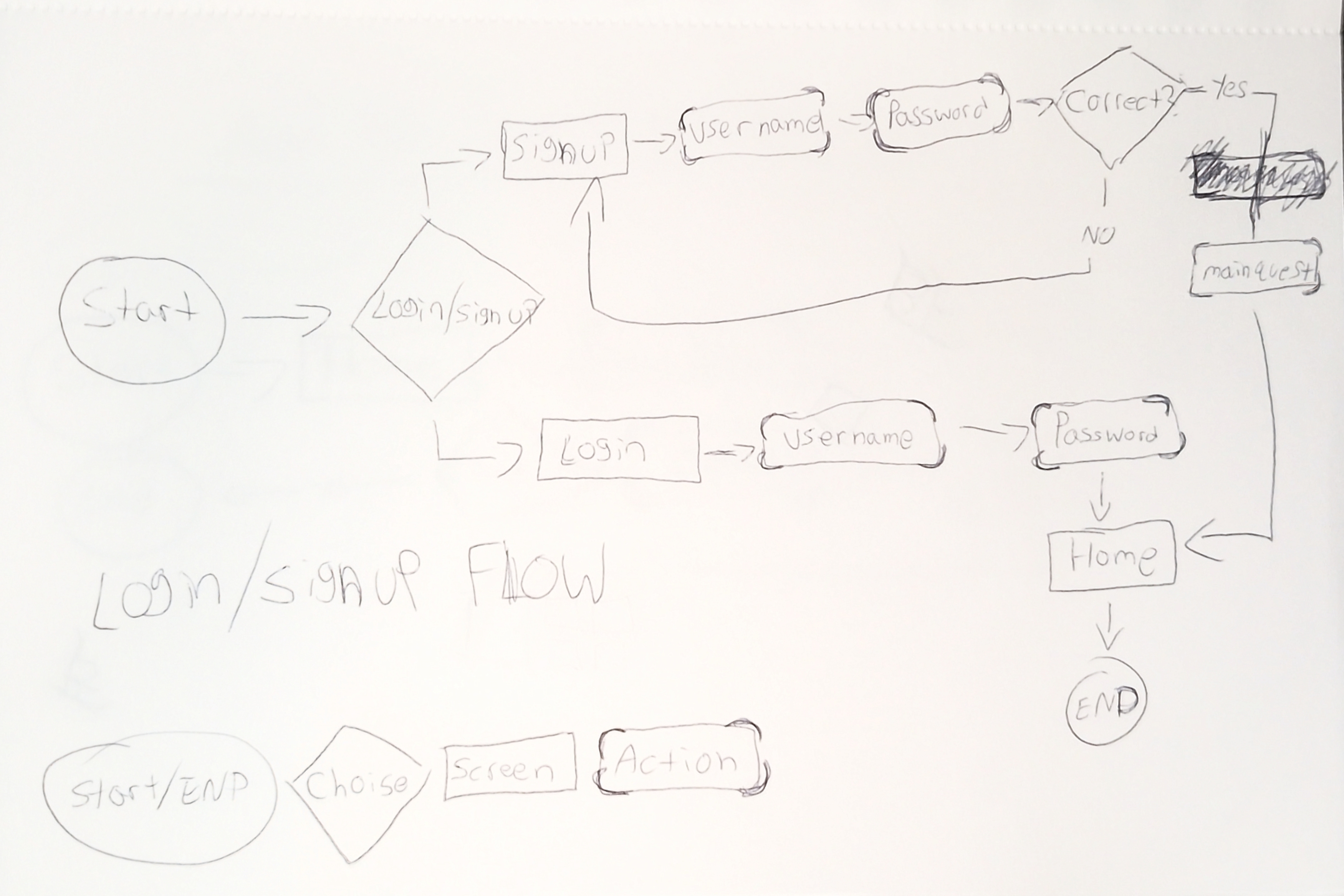
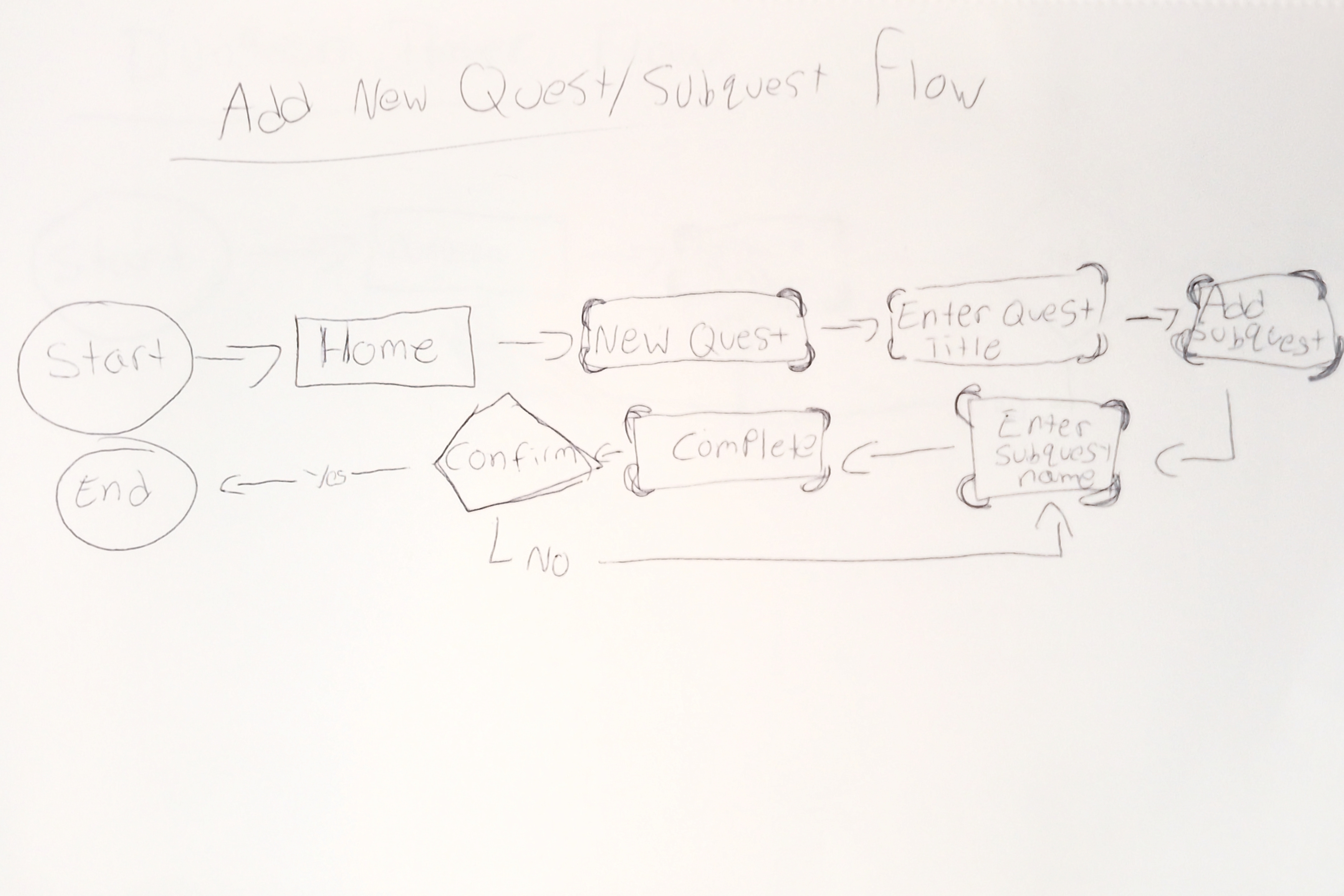
With a better understanding on how the app would fit together I sketched out key user flows for the app. This allowed me to visualize how the user would interact with the main loop of the app.
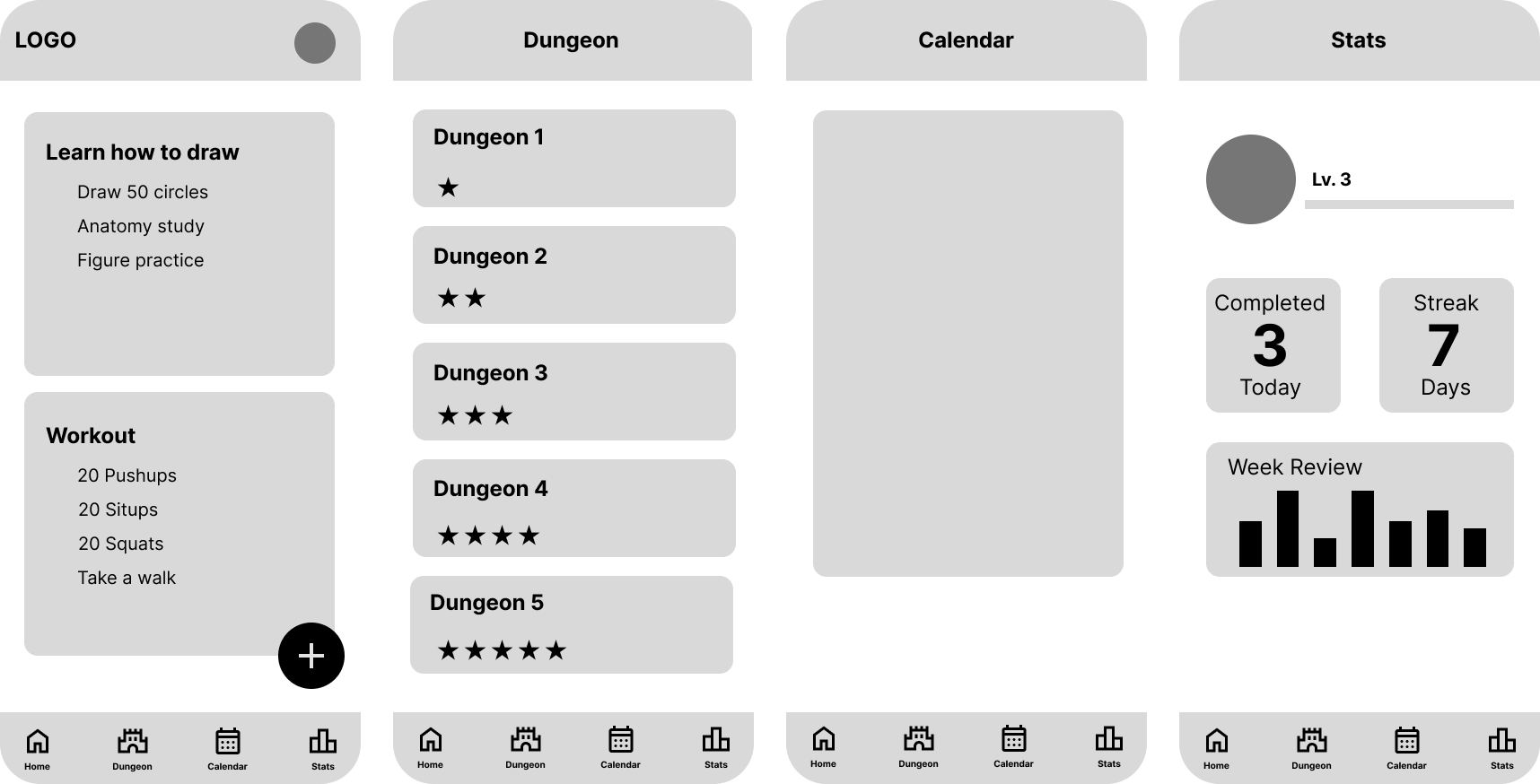
With the site map and key user flows defined more clearly I moved on to sketch what the different screens for the app might look like. I started by drawing the four key pages I wanted to highlight; the home screen, the dungeon screen, the calendar screen, and statistics screen.
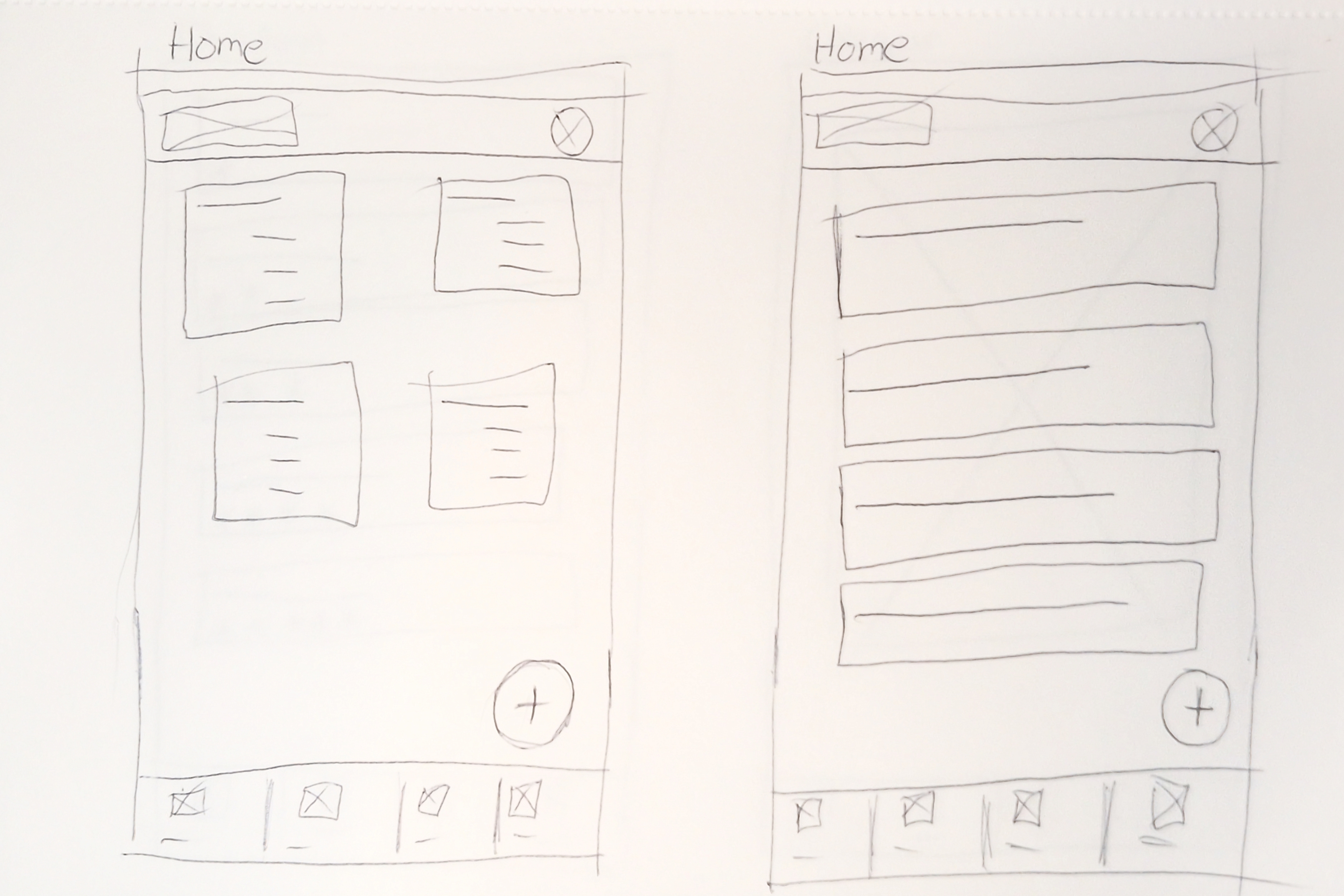
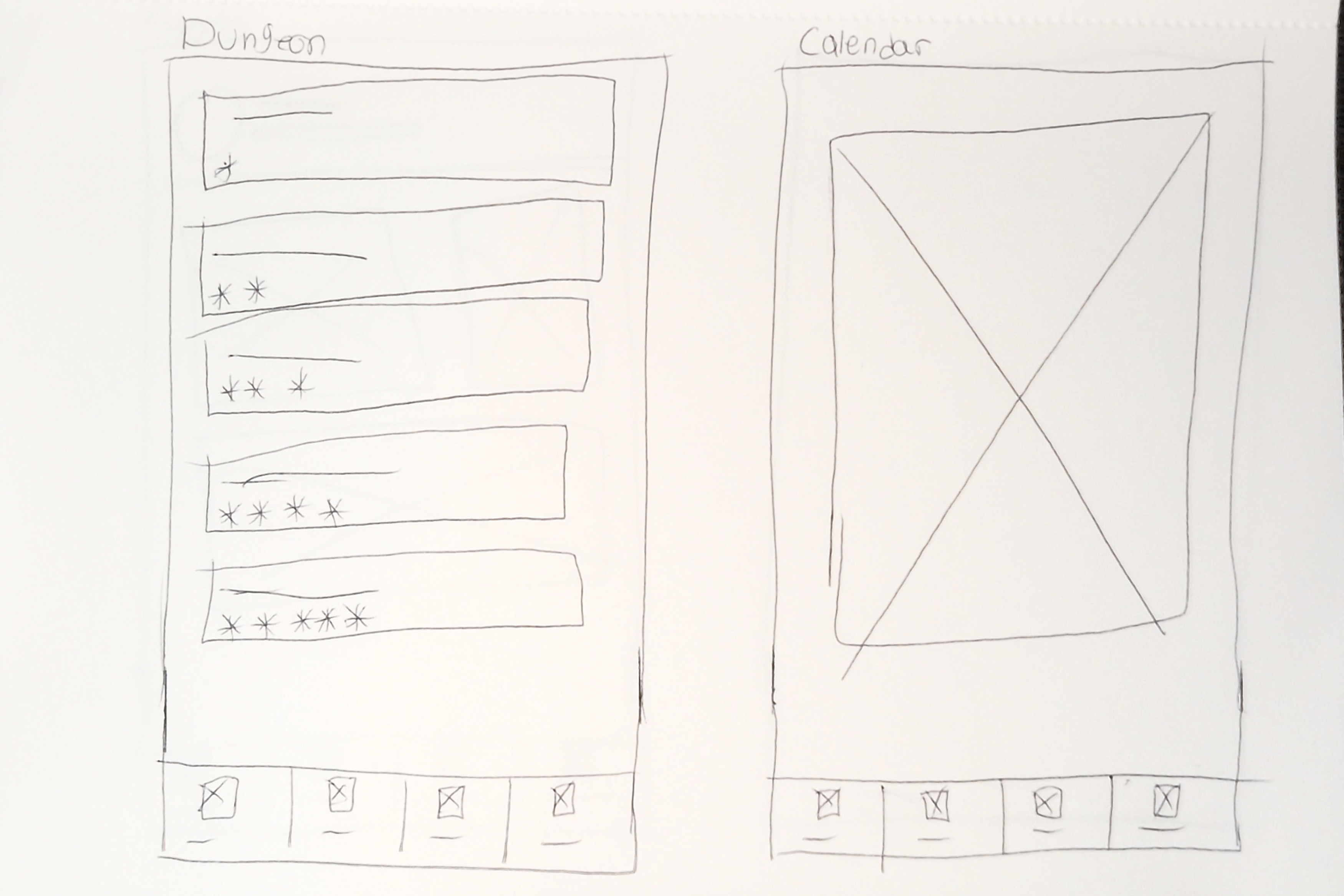
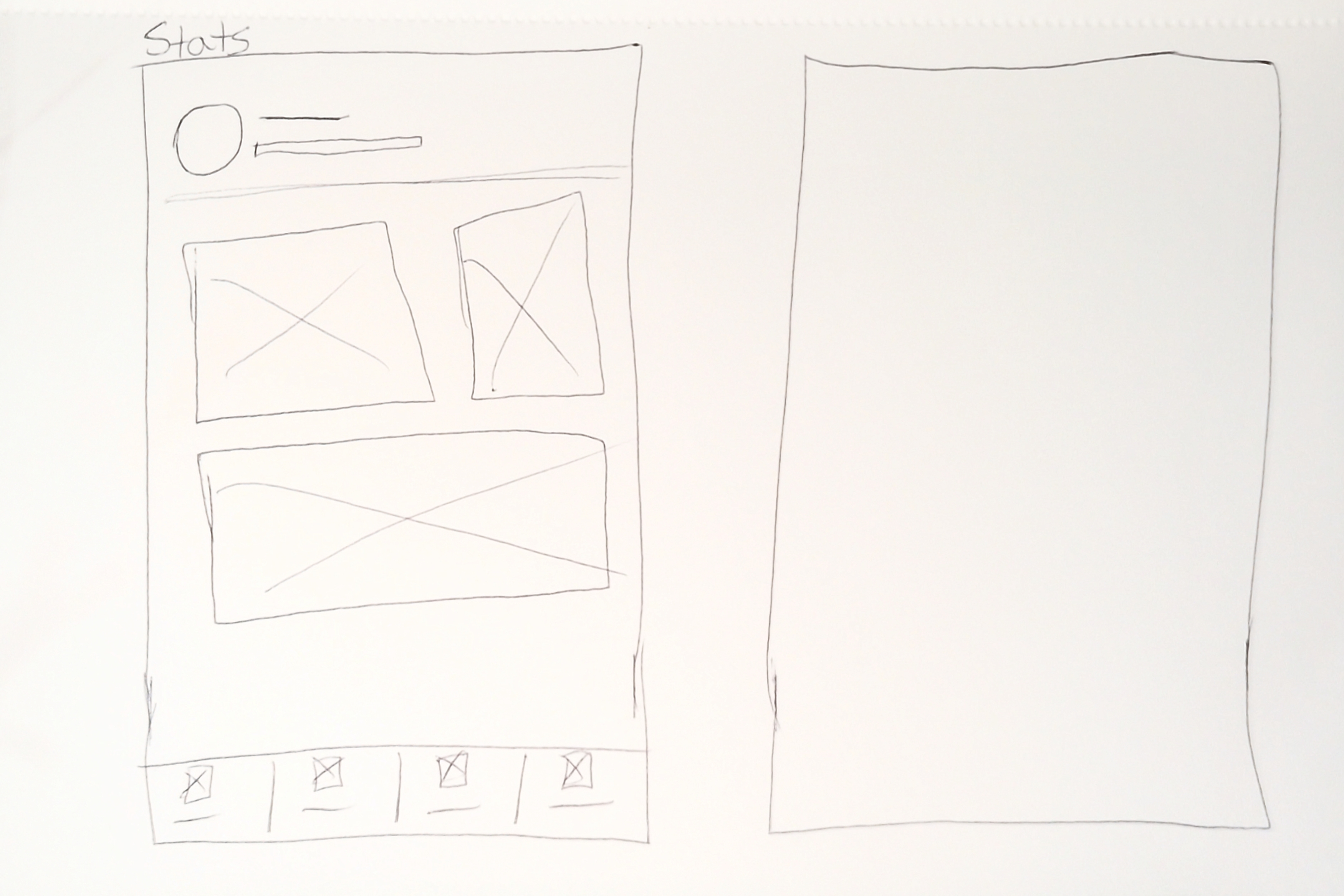
After sketching the highlighted screens, I began to digitize and refine them closer to what the final screens might look like.
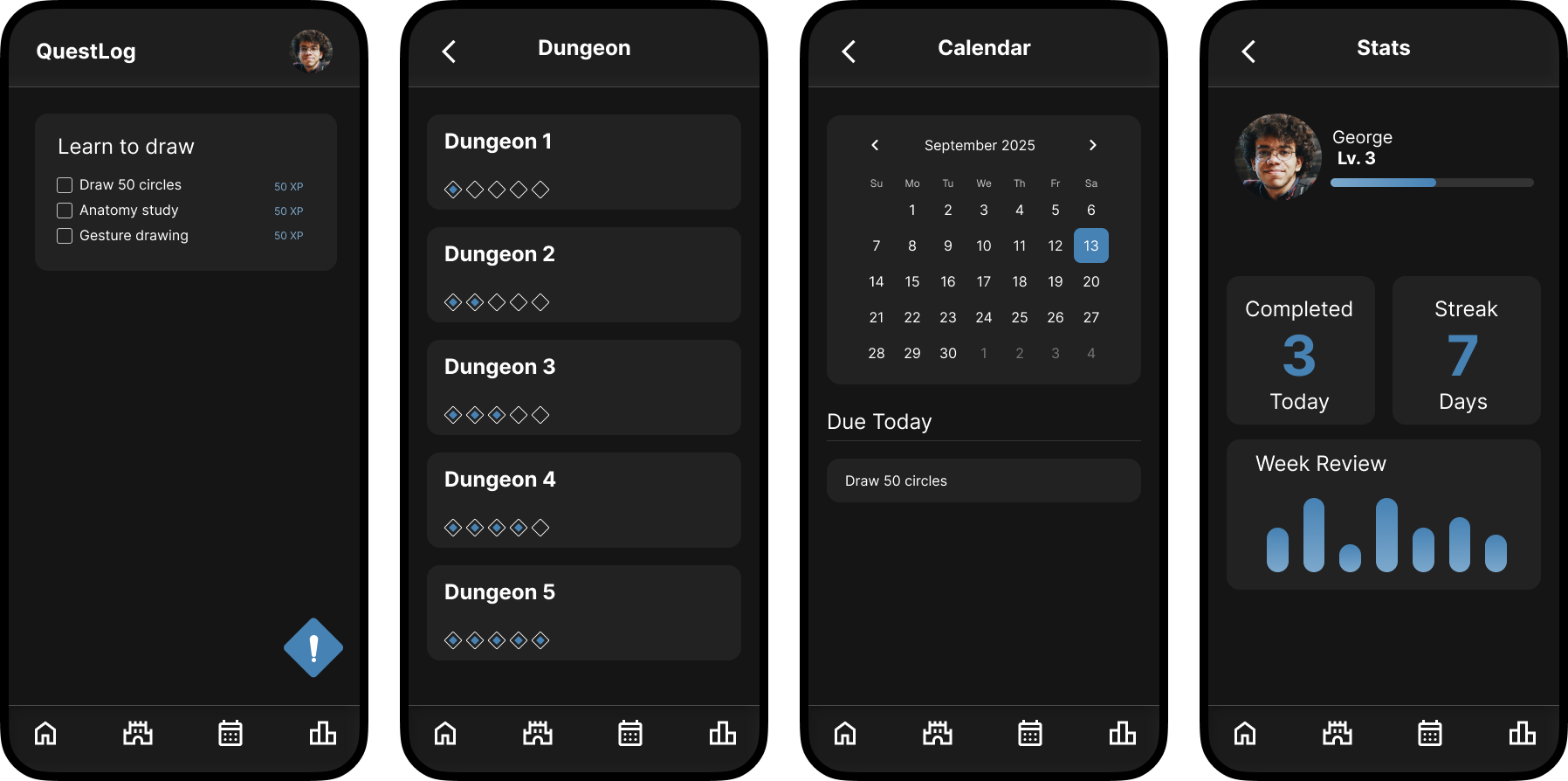
I decided to go with steel blue as the primary color for the app, I wanted the color to be calming and undistracting to the user and help promote focus. I also designed the app in dark mode to be less stressful on the user's eyes. I chose a sans serif font; Inter, for a minimal, clean and familiar feeling.
Now that I had my colors, font, and UI defined, I was able to implement them into a more refined version of the wireframes. Afterwards with all the necessary screens complete I began to wire up the screens and created an interactive prototype to be tested.
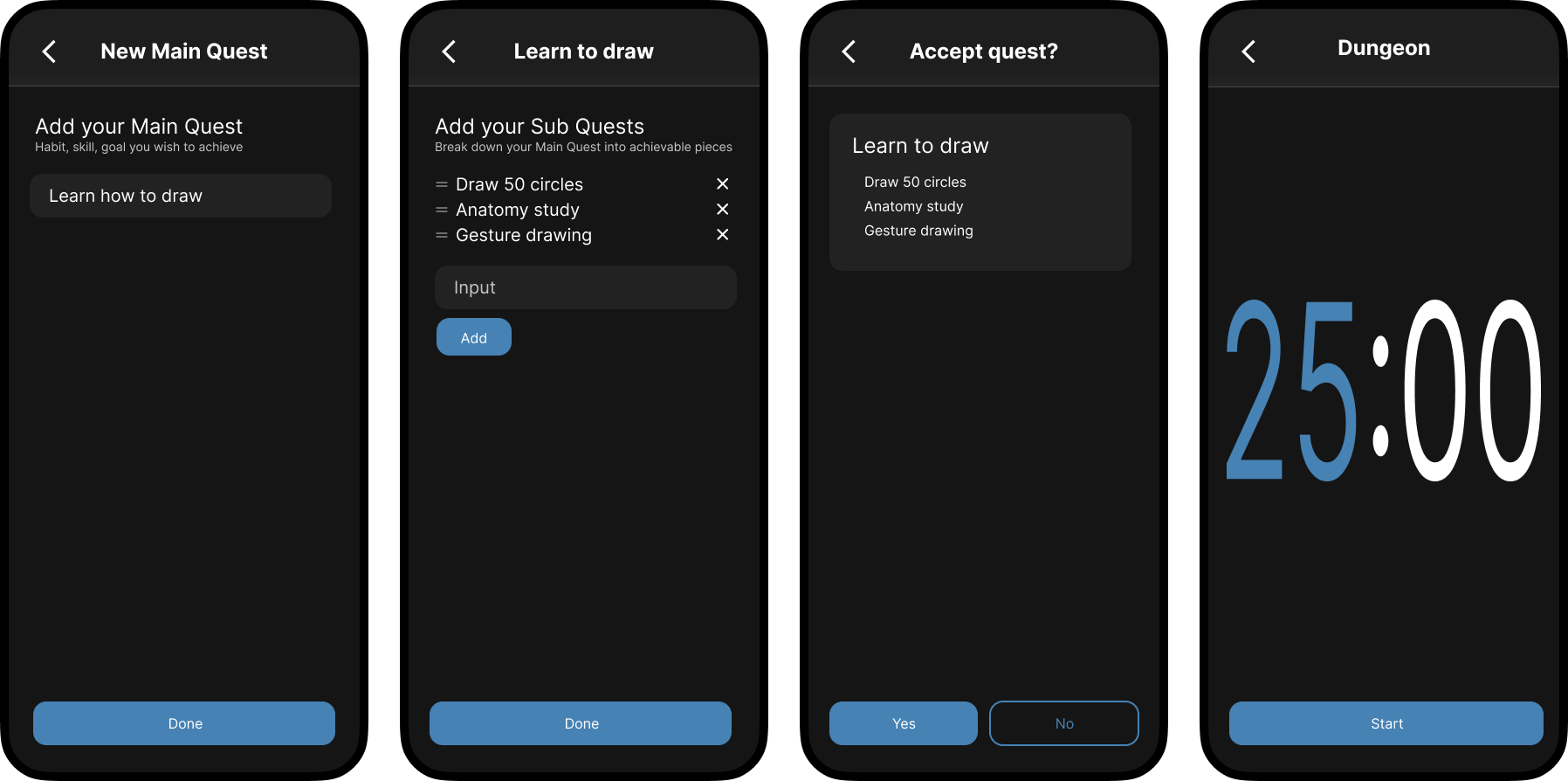
Through user testing there were two main pieces of information I was looking to gather.
These goals were the pivotal to continue to refine the wireframes and prototype.
After synthesising the data collected I made some adjustments to the UI of the app based on feedback collected from participants.
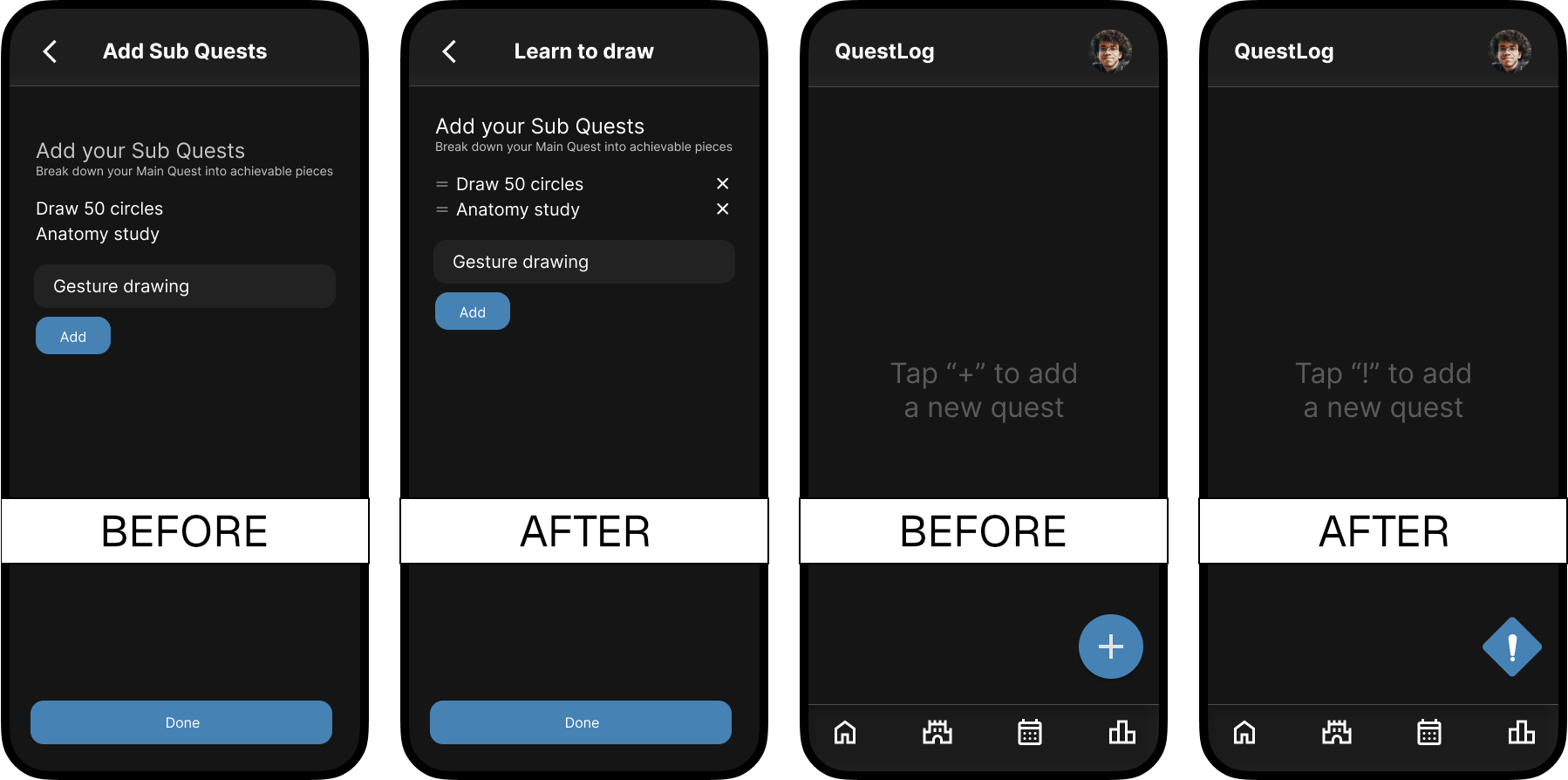
I encouraged the participants to voice any suggestions they would like to see or ideas on how they would improve the app. From the responses collected two suggestions that are worth exploring further are the inclusion of a check-in system, this would help the user see progress and help motivate them to continue further. The other would be to connect the dungeon timer to a quest the user created to focus on. This would help make the app feel more connected overall and also provide another statistic to track so the user can see how much time they spent on a quest.
Through the process of working though this project I had the opportunity to gain experience conducting user surveys and testing, deep diving into secondary research and designing the product. With this just being a MVP focused on the core loop of adding quests and subquests there were intended features that I wasn't able to fully design; such as, the sign up and login flow as well as the dungeon timer and user defined reward system. In future projects I'd like to be able to have a larger pool of users to get a better understanding of how real people would interact with the product to better design features for them.